By the time you reach senior year, it’s easy to assume school has always been this way: spirit weeks, last-minute assemblies, and posters no one reads taped slightly crooked to the walls. But according to dusty yearbooks and alumni who will not stop reminiscing, school used to look very different. Believe it or not, there were traditions—real ones—that students truly cared about.
Way back in 1975, Prep had an exciting tradition called “Mini-Week”. However, in the December 16th, 1975, newspaper editorial, Joe Bohorfoush claimed that the activities during this seemingly fun week were “completely irrelevant to the complete education of the individuals involved”. In the same paper, his classmate, Brett Bodemer, argued that it would allow students to apply their own curiosity to something they would like. He argued against those who claimed it is irrelevant by saying “To those who say it would be an inappropriate fixture at Prep I say only that they should close their books and open their minds and see what’s going on!”
So, what was Mini-Week and what happened? Mini week was a tradition for an estimated two years where “students would have the opportunity to take elective classes that were not offered during the school year. These classes were taken during a shortened week consisting of three days” wrote Gus Hall in the March 19th, 1976, newspaper. Some of these activities included: Speedreading, photography, movie making, canoeing, camping, sailing, and bachelor living (You’re guess on what this class was is as good as mine — mine being a class to teach teenage boys life skills that they would need if they were never to marry, but who knows). However, due to lack of student interest, and an impossible-to-meet deadline (March 16th), Prep students had to bid this week a farewell. Maybe we can bring it back this March?
Flash forward a few decades, Katie Lovejoy ’97 remembers a Prep experience filled with rituals that turned everyday school life into something more personal—and a lot more colorful. She mentioned that people would take home their friends’ yearbooks and that they were “very colorful and thoroughly marked up compared to what students do now”. Lockers weren’t just metal boxes but fully decorated spaces, lined with mirrors, collages, and notes from friends. With heavy textbooks and frequent locker stops, students practically lived out of them.
“There was a period called scramble. It would be most similar to what we call Window today. The difference was that everyone would sign up for a different activity every six weeks,” Sandra Foy said, a longtime school and college counselor who first arrived at Prep in 1979 before returning in 1991. She recalls a far less rigid schedule that encouraged exploration beyond academics, even though it was, at times, chaotic. “People were going bowling, people had a fashion class, some people did typing, and there were all these different things”.
Lovejoy also recalled that the Sophomores once took an annual class field trip to the Puyallup Fair, an event that felt less like a school obligation and more like a shared rite of passage (which I think all the Sophomores would agree to revive that tradition).
“Between the gym and the entrance to McDonnell, there was an area called ‘The Smoking Pit’”, Foy remembered. The pit was available to both students and faculty who wanted to smoke during a break, which was definitely a health hazard, earning regular visitors the nickname “the pit people.”
Lunch periods had their own traditions, with foosball tables drawing massive crowds. “Everybody would rush to the foosball tables,” Foy said, recalling intense lunchtime foosball wars where students even cheated by stuffing the table pockets to block shots. The lunchroom itself sat where the Commons is today, serving as another hub of daily life.
“Homecoming included royalty and a full caravan to West Seattle for the football game,” Lovejoy added. School spirit looked a little bigger—and louder. Spirit signs were painted by hand, assemblies featured dramatic run-throughs of banners, and senior classes even named the freshman class—for example, one name was “Pigs in space”—complete with the names printed on t-shirts.
“We had a schedule that would rotate every single day of the year,” Foy recalled. Prep operated on a rotating daily schedule unlike the quarterly rotations we have today. Classes weren’t labeled first period, second period, and so on—instead, they were called A, B, C, D, and rotated so that one day might start with A period, the next with B, and so forth. The goal, Foy explained, was to “ensure that every class had prime time with students at some point during the year”.
Not every tradition inspires nostalgia, though. Brian Meza ’92, now a longtime teacher, is perfectly happy to see one particular ritual stay in the past. New faculty members used to be introduced at opening ceremonies and then required to dance together.
“I had to dance with about five other new teachers to the Macarena,” Meza said. “Brutal. Just brutal.”
So, what happened to the rest? According to administrators—and common sense—schedules got tighter, rules got stricter, and attention spans got shorter. Add academic pressure and phones into the mix, and suddenly traditions started disappearing quietly—no farewell assembly, no announcement, just gone.
Still, these forgotten traditions mattered. They gave students something to look forward to and something to remember. They made school feel less like a checklist and more like a community.
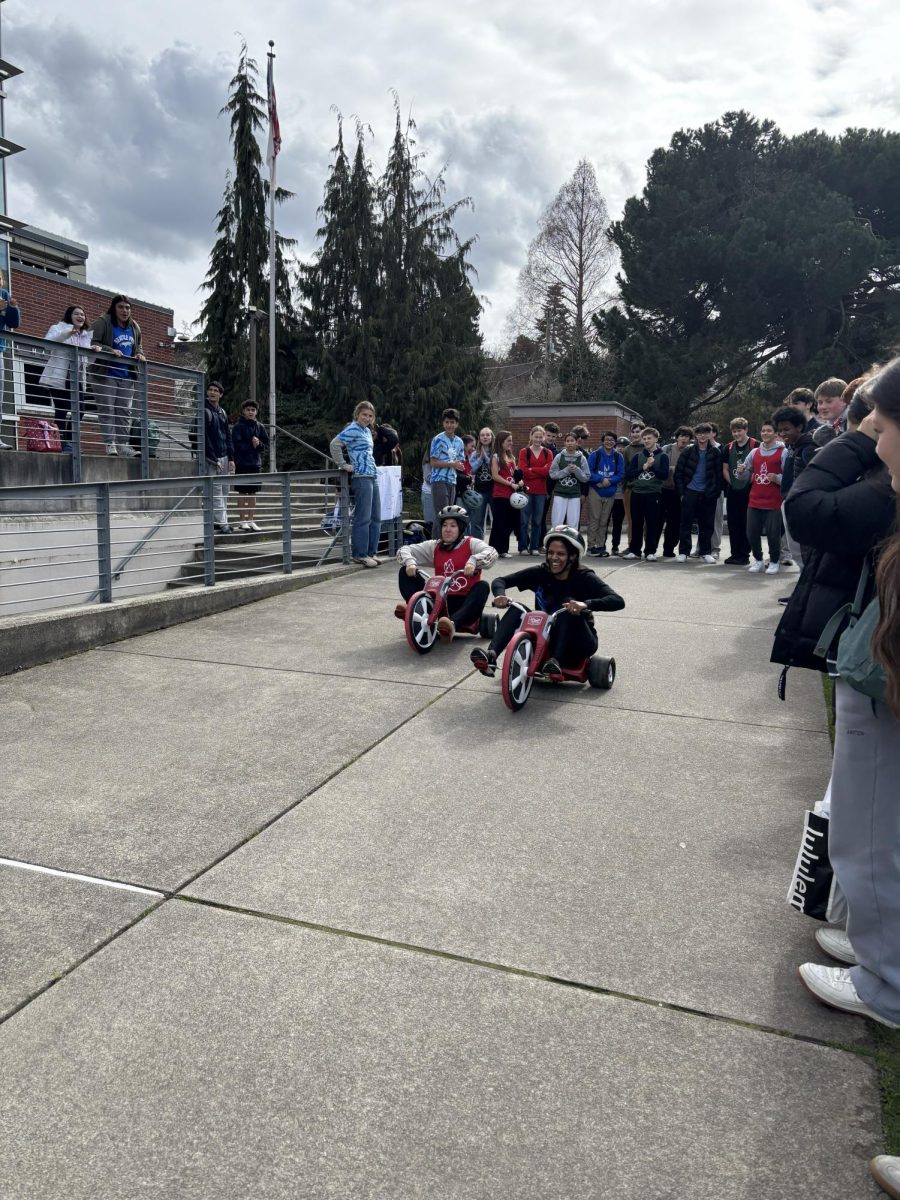
Maybe not every tradition needs to make a comeback (some should stay safely in the past), but this school has a history worth laughing about—and maybe even reviving. Because who knows? In 20 years, students might be writing about how Olympic Week was once a very big deal.