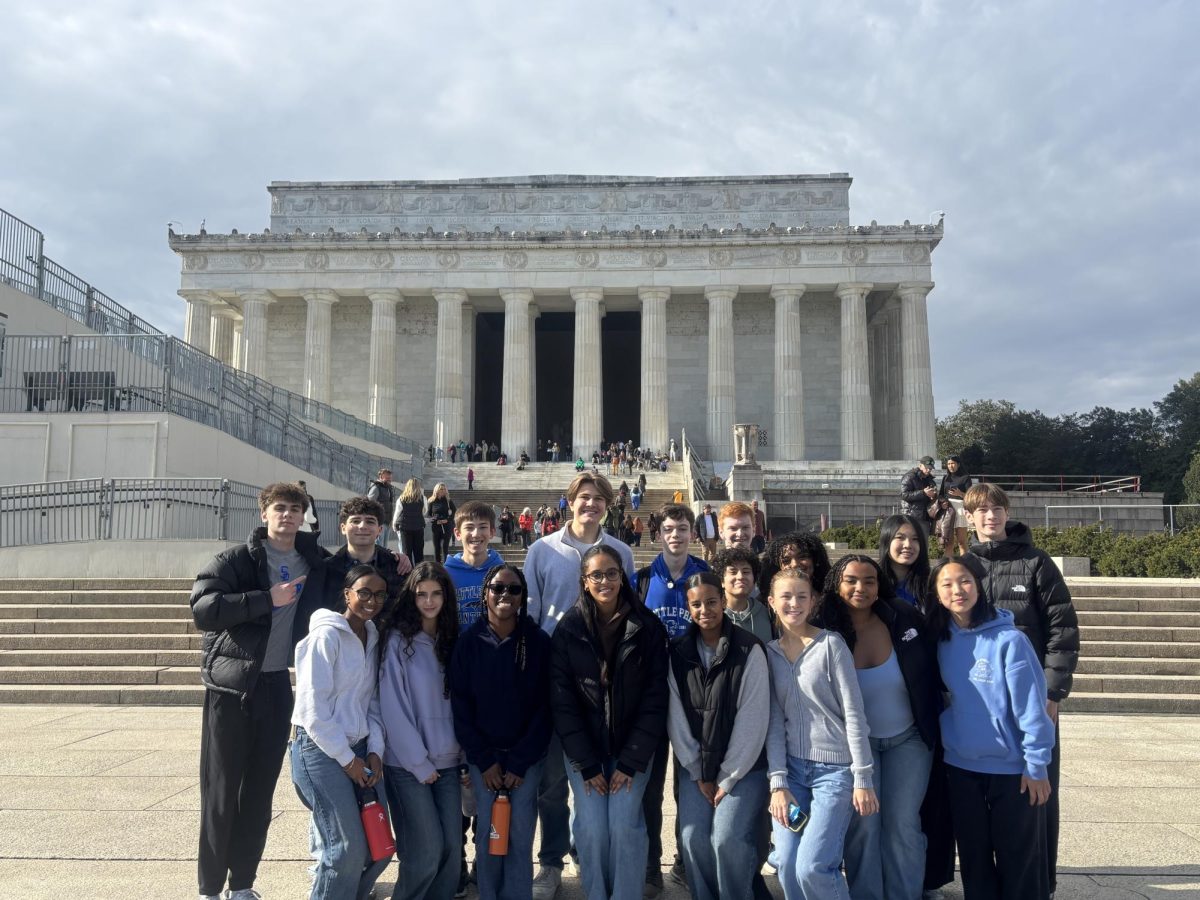
The Ignatian Family Teach-In for Justice (IFTJ) is the largest Catholic conference in the United States. It is hosted every year in the nation’s capital, Washington D.C. For the past four years since COVID, a group of Prep students and teachers fly to the capital to participate in breakout rooms, learn the stories of others, meet with Washington senators and representatives, and reflect on how to make their communities better.
The conference began in the 1990s as a protest to remember the lives of six Jesuits and their two female companions who were murdered in El Salvador on November 16, 1989.
“They were assassinated because of their work for justice,” said Ms. Miller, the director of the Magis Service and Justice Program. “These Jesuit priests at this university were part of the community that was pushing for accountability for the government protection of human rights and higher quality of life for the poor and the marginalized.”
Over the years, what started as a protest evolved into a conference where students are given the opportunity to learn about injustices in our country and around the world.
“We learn about what people around our country are doing to address these issues and be invited to think about what we can do and what our role is.” Said Miller.
The theme of the conference this year was “Pressing On”. The participants at the conference were invited to reflect on where they have been and where they are going. They encouraged participants to think about the role each of them is called to do and what direction they want their communities and country to steer to.
“I got to learn stories and perspectives when it came to migration or immigration; stories about how individuals have been impacted in their life, how that has shaped their identity, what they have become today and what they truly advocate for” Junior Mahta Teamrat said.
Students also went into breakout rooms to learn about topics meaningful to them. Ruth Aedao ‘27 and Paige Remmington ‘27 both went to a breakout room about Jesuit slaveholding. It was led by a teacher from Gonzaga Prep who had learned about the history of slaveholding with Georgetown University and the Jesuits after leading his students to learn more about the history of their school.
“There was a lot of connection between the school [Gonzaga Prep] and Georgetown,” said Aedao. “They researched and realized that Georgetown exists because of slavery.”
The Jesuits had owned about 275 slaves and sold many to acquire the money to build Georgetown; others were used to build the school and maintain it. Another shocking revelation is that some slaves were sold in order to pay to educate Jesuits.
“It was really eye-opening to learn that they have a darker history.” Said Aedao. “It is important and something that should be taught in school.”
One of the important aspects of this trip is the meeting that the students have with the offices of our Washington state senators and representatives. This gives students the opportunity to share their experiences and address an important issue to them with the people who represent them in the nation’s capital. It can be a daunting experience for the students, but an impactful one because young voices are the voices of the future.
“They were so kind and attentive and put their phones away and took notes on what we were saying.” Said Aedao, who had helped lead a group of students who talked about toxic waste clean-ups in Washington. “They really care about what the younger generation has to say.”
“If you look around your community, your city, your state, your country and there’s something that fires you up or that breaks your heart or both, I think the teach-in is a place to find and meet people who share that with you.” Said Miller.
“I really enjoyed it,” said Teamrat. “I got to connect with students from other schools and learn about what Catholic social teachings and Jesuit values mean to them and how they use it in their daily life.”
Since the beginning of the IFTJ it has been carrying out its mission every year: making an impact. It calls on students to bring the lessons they learned during the conference back to their communities and make them better. The IFTJ helps mold the voices of students into the voices of future leaders.