It’s Black Friday, and your phone buzzes with notifications. You open your favorite online storefront and freeze. There they are—the shoes you’ve been dreaming about—50% off, your size still available. A countdown ticks relentlessly in the corner, and a bright red banner screams: only 3 left! Your heart pounds and your chest tightens with the rush of anticipation. Every second feels like a race. You hover over the “buy now” button, a thrill coursing through you, and then – you click. Victory and relief flow.
Two weeks later, you stumble across the same sneakers online… for half the price. No countdown, no flashing banner. Just the real price, staring back at you like a punch to the gut. That excitement you felt is no more. Replaced by a mix of shock, frustration, and a sense of being played. What you thought was a win… was actually a trap.
If that scenario sounds familiar, you’re not alone. It happens to millions of shoppers every year. Every November, our inboxes overflow with promises of massive savings and one-day-only offers. But many of these “discounts” are just marketing tricks designed to make us feel like we’re saving money when we’re not. As The Washington Post explains, retailers often raise prices first—then mark them back down to create the illusion of a deep sale. Jie Zhang, a marketing professor at the University of Maryland, calls this tactic “a form of deceptive pricing.”
It’s a simple scheme that works. Most shoppers don’t track exact prices week to week, so when we see something labeled “40% off,” we assume it’s a bargain. But a 33-week investigation by Consumers’ Checkbook, a nonprofit consumer watchdog, found that many stores—including big names like Amazon, Old Navy, and Walmart — advertise discounts based on fake “anchor prices” that were never actually charged. “Very few retailers ever charge that crossed-out price,” said consumer expert Kevin Brasler in an interview with CBS News. “They exist only to make you think you’re getting a screaming deal.”
And the tactic doesn’t just fool adults. According to Ireland’s Competition and Consumer Protection Commission (CCPC), more than half of people aged 15 to 24 say they trust the accuracy of advertised discounts – making young shoppers especially vulnerable to these false deals. In other words, the group most likely to fall for fake markdowns is well…us.
Psychologist Bryce Muller explains why these tricks hit so hard: “Push notifications, countdowns and timed offers create an environment that fuels the idea of ‘hunting’ for the best price. Every purchase becomes a micro-victory.” Muller adds that our brains are hardwired to respond to scarcity: “When a site shows the words ‘only 3 pieces left,’ the fear of losing the opportunity is activated. At that moment, critical thinking weakens and impulse prevails.”
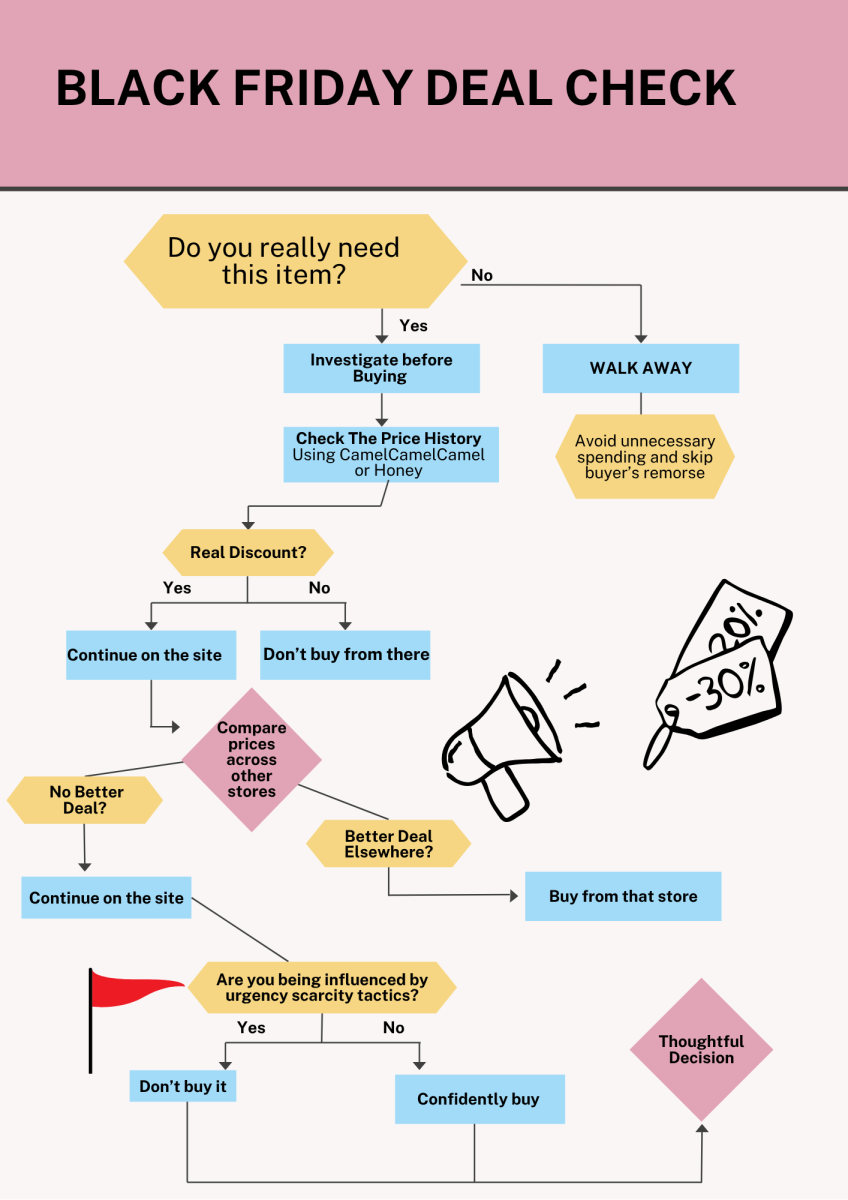
Before you rush to click “add to cart” this Black Friday, take a breath. Check the price history using online resources like Honey to compare prices across all sites. And remember: if a deal looks too good to be true, it probably is.
Black Friday used to be about scoring bargains. Now, it’s often about who’s being played. Don’t let deceptive discounts make you the product this holiday season.